
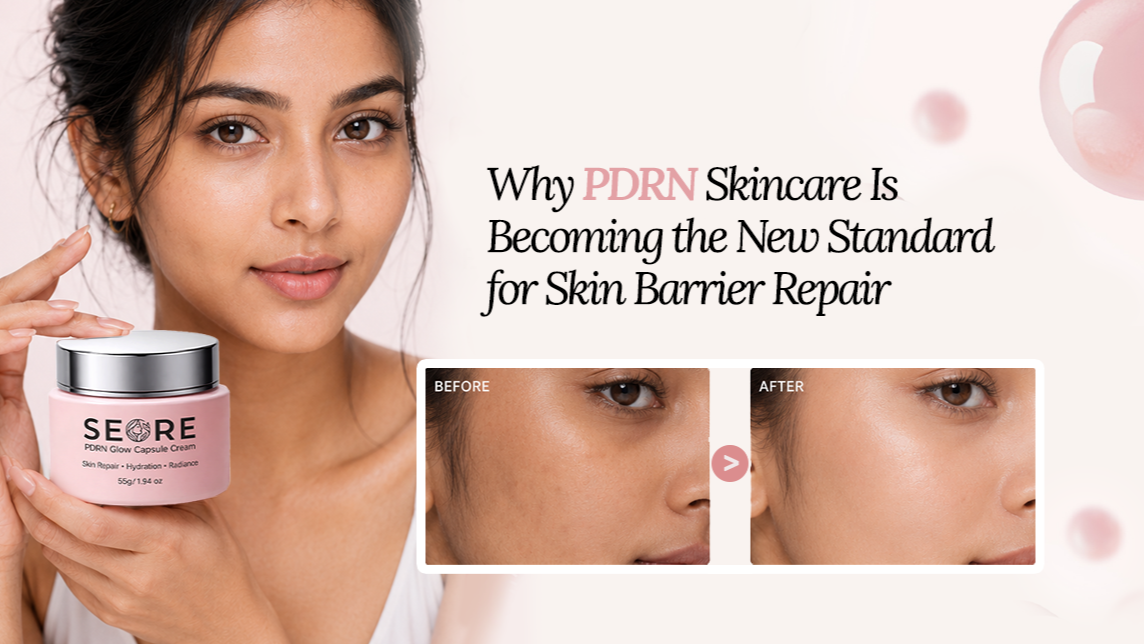
Why PDRN Skincare Is Becoming the New Standard for Skin Barrier Repair?
For years, skincare conversations focused heavily on glow, brightness, and instant results. But today, consumers are asking a different question: Is my skin actually healthy?
As awareness around skin sensitivity, moisture loss, inflammation, and long-term barrier damage continues to grow, skincare is evolving from surface-level hydration toward deeper skin recovery. That shift is one of the biggest reasons why #PDRN is gaining global attention in regenerative skincare.
From Clinical Healing to Modern Skincare
Before entering skincare, Polydeoxyribonucleotide was widely used in clinical medicine for tissue repair. Derived from highly purified salmon DNA, it became recognised for supporting skin recovery with low risk of irritation.
In the 1980s and 1990s, doctors in Italy and South Korea used PDRN for wound healing, burns, and diabetic ulcers. Korean dermatologists later introduced it into aesthetic treatments like Rejuran “salmon DNA facials” to calm post-procedure skin, improve acne scars, and support deeper skin regeneration.
Over time, PDRN evolved from a clinical recovery ingredient into a key part of Korea’s barrier-focused skincare movement.
The Korean Skincare Influence Behind PDRN
Korean skincare trends have played a major role in bringing regenerative ingredients like PDRN into mainstream beauty conversations.
Originally associated with professional aesthetic treatments, PDRN became recognised for its ability to support skin recovery and improve the appearance of stressed or weakened skin. Over time, this clinic-led ingredient started appearing in skincare formulations designed for consistent at-home use.
Its growing acceptance within dermatology has also accelerated global awareness. Today, over 25% of dermatology clinics across the Asia-Pacific region offer PDRN-based treatments, accounting for roughly 3.2 million procedures globally in a single year.
Instead of over-exfoliating or relying on harsh actives, many are prioritising skincare that helps strengthen the skin barrier and improve resilience over time.
Why PDRN Matters More for Indian Skin Today
Indian skin faces unique environmental stress factors throughout the year.
High pollution exposure, rising temperatures, humidity fluctuations, UV damage, frequent tanning, and hard water exposure can all contribute to dehydration and barrier imbalance.
At the same time, the growing popularity of exfoliating acids and active-heavy skincare routines has increased skin sensitivity concerns among urban consumers.
As awareness around skin barrier health grows in India, many consumers are moving toward skincare that focuses on repair and recovery instead of over-correcting the skin.
This is where ingredients like PDRN are beginning to stand out.
Bringing Regenerative Skincare Into an Everyday Format
Recent skincare research suggests that nearly 60% of visible skin ageing is linked to barrier damage and moisture loss, not just sun exposure. Instead of delivering only surface hydration, newer skincare formulations are combining regeneration-focused ingredients with long-term barrier support.
SEORE’s PDRN Glow Capsule Cream was developed around this philosophy, combining hydration, nourishment, and skin-recovery support in a single adaptive formula.
Ingredients That Support Skin Recovery and Barrier Health
Scientific reviews have highlighted PDRN’s role in supporting collagen synthesis, tissue repair, skin revitalisation, and anti-inflammatory activity, which is why it continues to gain attention in regenerative dermatology and skin recovery research.
Key Ingredients Behind The Formula
- Polydeoxyribonucleotide (PDRN): Supports skin regeneration pathways associated with cellular repair and recovery
- Multi-Molecular Hyaluronic Acid: Hydrates multiple layers of the skin instead of only the surface
- Ceramide Complex (1,2,3,4,6): Strengthens the skin barrier and prevents moisture loss
- Peptide Complex: Helps support collagen production and improves skin firmness
- Niacinamide + Diacetyl Boldine: Works on uneven skin tone and dullness
- Sea Kelp Extract & Fermented Polypeptides: Help improve skin texture and nourish the skin.
The Growing Demand for At-Home Recovery Skincare
PDRN has already become a recognised ingredient in regenerative dermatology and professional skincare treatments across global markets.
While clinical procedures and topical skincare serve different purposes, growing awareness around PDRN has increased demand for everyday skincare products that support consistent skin maintenance and barrier recovery at home.
SEORE brings this approach into a daily skincare format that focuses on long-term skin health, hydration, and recovery support.
The formula is also cruelty-free, biodegradable, and developed with recovery-focused actives designed for modern skin concerns.
The Future of Skincare Is Moving Toward Recovery
The skincare industry is gradually shifting from aggressive correction toward smarter skin maintenance.
Consumers today are becoming more ingredient-aware, barrier-conscious, and focused on long-term skin resilience. Regenerative ingredients like PDRN are gaining attention because they align with that shift toward supporting healthier-looking skin through recovery rather than temporary surface results.
PDRN has already shaped regenerative skincare conversations in Korean dermatology for years. Bringing that science into an everyday skincare format without making skincare feel clinical or complicated is where brands like SEORE are focusing next.
Do you think regenerative ingredients like PDRN will become the future of everyday skincare?
Read more
Every skincare conversation in India begins with a familiar question: why does a product that works perfectly elsewhere suddenly feel ineffective here? The answer lies less in trends and more i...

For years, skincare focused on hydration and instant glow. Today, the conversation is shifting toward regeneration and long-term skin health. Pollution, hard water, UV exposure, and daily envir...