
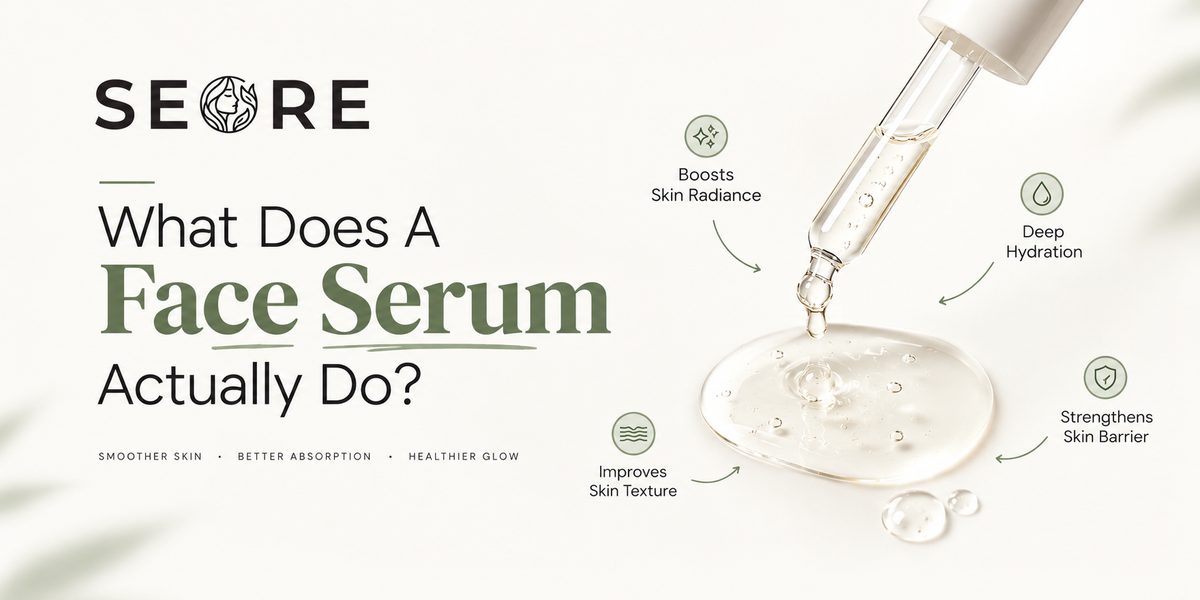
What Does A Face Serum Actually Do? (And Who Needs One)
Walk down any skincare aisle, or scroll through any routine video, and serums seem to be everywhere. They come in small bottles with long ingredient lists and big promises, and it is easy to wonder whether you actually need one.
This is the first post in a short series on serum, moisturiser and sunscreen. It starts with serums: what a serum is, what it can reasonably do for your skin, and who can comfortably skip it.
What Is A Serum In Skincare?
A serum is a lightweight skincare product, usually water-based or gel-like, built around a small number of chosen ingredients. Its texture is thin so that it spreads easily and sits comfortably under a moisturiser.
It helps to think of the three basic steps as different jobs. A serum delivers specific ingredients. A moisturiser softens the skin and helps keep that comfort in place. A sunscreen protects against UV during the day. A serum is not a stronger version of a moisturiser, and it does not do the work of either of the other two.
What A Serum Actually Does?
What a serum does depends on what is in it. Most everyday serums focus on two things.
- Hydration: Humectants such as sodium hyaluronate and glycerin attract water and help skin hold on to it, which is why skin often feels softer and less tight after use.
- Skin conditioning: Ingredients such as niacinamide, betaine and allantoin are commonly used to help skin feel smoother and more comfortable.
These are comfort and care benefits. A serum is not a treatment, and results vary with the formula, how often you use it and your own skin. It is also worth being realistic: no serum replaces a moisturiser or daily sun protection.
Serum Formats: Bottles, Ampoules And Sheet Masks
Serums come in more than one form. The most familiar is a dropper bottle or pump, used daily. Ampoules are small, concentrated single-use or short-use vials, often used for a set period. Sheet masks are a third format.
A serum sheet mask is a sheet of fabric or hydrogel soaked in a serum-like essence. You leave it on for the time stated on the pack, then press in whatever remains on the skin. It is a convenient way to give skin a concentrated dose of hydration without adding a new step to every routine.
Where Jelly Masks Fit
Jelly-textured masks are a variation on the same idea, with a gel-like feel and a focus on hydration. A Jelly Serum Sheet Mask works best as an occasional extra, perhaps once or twice a week, rather than a daily replacement for a leave-on serum. For a closer look at the format, see how jelly masks differ from regular sheet masks.
Who Needs A Serum (and who can skip it)
A serum is a good fit if you enjoy layering, if your skin often feels tight or dull-looking by afternoon, or if you want to add a particular ingredient to your routine.
You can comfortably skip it if you prefer a short routine. If you have to choose, a cleanser, a moisturiser and a daily sunscreen matter more than any serum. Some people also prefer formulas that combine more than one of these steps, which is a reasonable choice as long as each job is still being done.
If your skin is sensitive, patch-test any new serum on a small area before using it on your face.
Choosing A Serum For Indian Skin
Climate shapes what feels comfortable. In humid, hot weather, rich layers can feel heavy and sticky, while air-conditioned rooms can leave skin feeling dry. Strong sun exposure also means daily sunscreen does far more for your skin than any serum can. If you are choosing one, this guide to sunscreen options for different skin needs is a good place to start.
This is where Korean skincare for Indian skin becomes a practical question, not a trend. The useful features are light textures, comfortable layering and ingredients you can actually identify. SEORE's products are made with Korean formulations designed for Indian skin and climate.
When you compare serums, look for a lightweight texture, a short and understandable ingredient list, and a finish you would be happy to wear in your own weather.
Do You Need To Spend A Lot?
Price tells you little on its own. Affordable Korean skincare in India can be well formulated, and an expensive product is not automatically a better one. What matters more is whether the formula is clearly built for a purpose, whether you can see what the key ingredients are, and whether the texture suits you.
A simple routine you will use every day will do more for your skin than an elaborate one you abandon after two weeks.
How To Read A Product Label
- Ingredient order: Ingredients are listed from highest to lowest amount, so the first few tell you most about the formula.
- Key ingredients: Check that the ingredient a product highlights actually appears in the list.
- "Natural" is not the same as gentle: Judge a product by its ingredients and how your skin responds.
- Where you buy: When buying Korean skincare online in India, buy from the brand's own site or an authorised seller, and check the expiry date and batch details on arrival.
Trending ingredients are worth understanding before you buy. This explainer on what PDRN is and why it is trending shows the kind of question to ask of any new ingredient.
How To Use A Serum
- Cleanse your face and leave it slightly damp.
- Use a few drops or one to two pumps, and press it gently into the skin.
- Give it a minute to settle, then follow with a moisturiser.
- In the morning, finish with sunscreen. Serum comes before moisturiser and sunscreen, never after.
- If the serum is new to you, start every other day and see how your skin responds.
Next in this series: how moisturisers work, and how hydration differs from moisturisation.
Frequently Asked Questions:
Q. Can I use a serum every day?
A. Most hydrating serums are designed for daily use, morning, evening or both. Follow the directions on the pack, and start slowly if your skin is sensitive.
Q. Do I need a serum if I already use a moisturiser?
A. No. A moisturiser and sunscreen cover the basics. A serum is an optional step that adds hydration or specific ingredients.
Q. Can I use a face serum and a sheet mask on the same day?
A. Yes, many people do, but there is rarely a need for both. If you use a mask, you can skip the serum that day and follow with a moisturiser.
Q. What happens if I stop using serum?
A. Nothing harmful. Your skin doesn't become dependent on it. You may notice slightly less hydration or comfort, but a moisturiser and daily sunscreen cover the basics, and you can add a serum back whenever you like.
The Short Version
A serum is a useful, optional step that adds hydration and comfort to a routine. It does not replace a moisturiser or sunscreen, and it is not essential for everyone. Choose it because you will enjoy using it, not because a routine tells you to.
If you want to explore light weighted products just check out SEORE, We are a Korean skincare brand in India. Learn more at seoreindia.com.
Read more
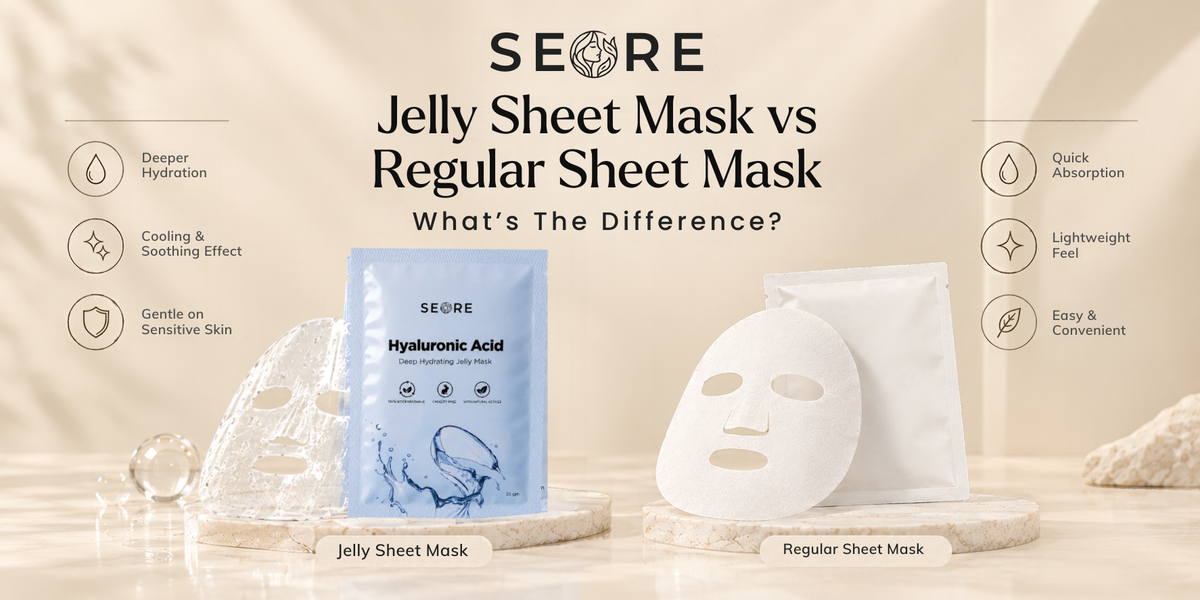
Jelly face mask or regular sheet mask? Compare texture, hydration, finish and how long each stays moist, plus how to pick one for your skin.

Last month, we gave our sunscreen to a community of runners to try during an early morning run. After the trial, we received a lot of feedback about how light and comfortable it felt on the ski...
Leave a comment
This site is protected by hCaptcha and the hCaptcha Privacy Policy and Terms of Service apply.