
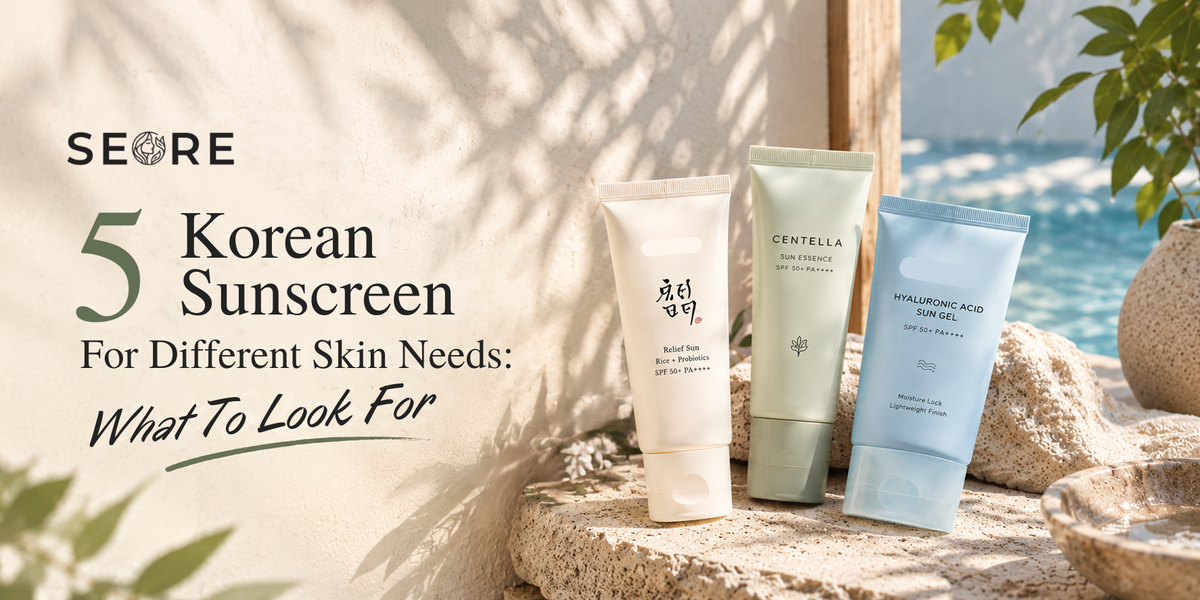
5 Korean Sunscreens For Different Skin Needs: What To Look For
Korean sunscreens have earned a loyal following for a simple reason: they tend to feel good to wear every day. That matters, because the best sunscreen is the one you'll actually reapply. Choosing among korean sunscreens usually comes down to a handful of factors - SPF and PA protection, the ingredients used, how the formula feels on skin, and how well it fits your daily routine and climate. This article looks at five Korean sunscreen options available in India, comparing their protection levels, formulations and textures so you can weigh them against your own skin type, rather than following a single recommendation. None of these products is presented as objectively superior to the others - the goal is to help you compare, not to crown a winner.
What Are The Top 5 Korean Sunscreens Right Now?
The five sunscreens below are widely available Korean options, each built around a different formulation approach. Rather than ranking them, this comparison looks at their protection level, key ingredients, texture and finish, and the kind of skin type or concern each formulation tends to suit.
Beauty of Joseon Relief Sun: Rice + Probiotics
Beauty of Joseon Relief Sun: Rice + Probiotics offers SPF 50+ PA++++ protection and is one of the more widely recognised korean sunscreen brands available in India. It's known for folding traditional Korean beauty staples - rice and fermented probiotics - into a modern sunscreen, rather than relying only on standard UV filters.
It's included in this comparison partly for how it balances a simple, familiar ingredient story with everyday wearability. The texture is light and milky, leaning toward a dewy finish, and generally suits normal to dry skin that wants a hydrated look. As with any new Korean face sunscreen, a patch test is worth doing first.
SEORE Vegan Sun Shield SPF 50+ PA++++ Sunscreen
SEORE is a Korean skincare brand available in India. Its Vegan Sun Shield offers SPF 50+ PA++++ protection in a lightweight lotion with a dewy finish, formulated to feel comfortable rather than heavy on the skin through the day.
Its formulation is built around a 30% of Dendropanax extract solution & 1% of Galactomyces Ferment Filtrate, which the brand highlights as a central ingredient in this sunscreen.
The product's SPF has been clinically evaluated under the supervision of dermatologist Dr. Won Ung Shin at the Korea Institute of Dermatological Sciences, with a measured Sun Protection Factor of 64.6 and no adverse skin reactions recorded during testing, supporting its SPF 50+ label.
For everyday use in Indian heat and humidity, a lightweight, dewy sunscreen that doesn't feel sticky can be easier to reapply consistently - which matters more for actual protection than the SPF number alone. Whether this formulation suits your own skin, including as a korean sunscreen for sensitive skin, is worth checking against your personal ingredient tolerance, ideally with a patch test. You can find the full product listing on the SEORE Vegan Sun Shield SPF 50+ PA++++ product page.
SKIN1004 Madagascar Centella Hyalu-Cica Water-Fit Sun Serum
SKIN1004 built its reputation around Centella asiatica, and the Madagascar Centella Hyalu-Cica Water-Fit Sun Serum extends that focus into sun protection, offering SPF 50+ PA++++ coverage alongside a hyaluronic acid (Hyalu-Cica) complex.
It's included here because it approaches sunscreen differently from a typical lotion or cream: the watery serum texture absorbs quickly without a heavy film. That's part of why it tends to appeal to people who want their sun protection step to double as a soothing, hydrating layer, including those managing occasional redness.
Isntree Hyaluronic Acid Sun Gel
Isntree has built a following around simple, ingredient-led formulas, and its Hyaluronic Acid Sun Gel reflects that approach - SPF 50+ PA++++ protection built around a single standout ingredient, hyaluronic acid, rather than a long list of additions.
It's included in this comparison for its gel texture, which absorbs quickly and leaves a fresh, close-to-weightless finish. That tends to make it a common choice for oily or combination skin that wants hydration without added shine, and for anyone who finds thicker sunscreens uncomfortable to reapply over makeup.
COSRX Aloe Soothing Sun Cream SPF 50+ PA+++
COSRX is one of the better-known names in Korean skincare internationally, and its Aloe Soothing Sun Cream reflects the brand's minimalist, comfort-first approach - SPF 50+ protection with a PA+++ rating, built around aloe vera extract.
It's included here as the cream-based option in this comparison: thicker than a gel or serum, but still designed to sit comfortably under makeup. That cushioning, moisturising base tends to suit dry or sensitive skin looking for a calmer, simpler sunscreen step.
How Do These Korean Sunscreens Differ?
The table below summarises how these five sunscreens differ across protection, ingredients, texture and finish, and the kind of skin they tend to suit. It's meant to show differences, not to declare one option objectively better than the rest.
|
Sunscreen |
SPF/PA |
Key Ingredients |
Texture/Finish |
Suitable For |
|
Beauty of Joseon Relief Sun: Rice + Probiotics |
SPF 50+ PA++++ |
Rice bran water, probiotics |
Light, milky, dewy-leaning finish |
Normal to dry skin wanting a hydrated look |
|
SEORE Vegan Sun Shield SPF 50+ PA++++ |
SPF 50+ PA++++ |
30% Dendropanax extract solution, 1% Galactomyces Ferment Filtrate- |
Lightweight lotion, dewy finish |
Everyday wear in heat and humidity; those who dislike heavy sunscreen + hydrated look |
|
SKIN1004 Madagascar Centella Hyalu-Cica Water-Fit Sun Serum |
SPF 50+ PA++++ |
Centella asiatica, hyaluronic acid complex |
Watery serum |
Those wanting hydration and soothing with sun protection |
|
Isntree Hyaluronic Acid Sun Gel |
SPF 50+ PA++++ |
Hyaluronic acid |
Gel, fast-absorbing |
Oily to combination skin wanting a light, hydrating finish |
|
COSRX Aloe Soothing Sun Cream |
SPF 50+ PA+++ |
Aloe vera extract |
Cream |
Dry or sensitive skin wanting a calming, cushioning base |
What To Look For When Choosing A Korean Sunscreen
SPF And PA Protection
SPF measures protection against UVB rays, which cause sunburn, while the PA rating measures protection against UVA rays, linked to premature skin ageing. A sunscreen spf 50 provides a high level of UVB protection, and paired with a PA+++ or PA++++ rating, as most korean spf 50 sunscreen options are, indicates strong broad-spectrum coverage. A higher rating doesn't automatically make a spf 50 pa+++ sunscreen the right fit for everyone, though - texture, ingredient tolerance and how consistently you apply it matter just as much.
Texture And Finish
Textures range from watery serums and gels to milky lotions and creams, with finishes spanning matte to dewy. A sunscreen you find comfortable to wear is one you're far more likely to reapply, so this is often a more practical consideration than protection level alone.
Ingredients
Beyond the UV filters themselves, many Korean sunscreens include supporting ingredients - humectants like hyaluronic acid, soothing extracts like centella asiatica or aloe vera, or texture-modifying ingredients like Polysilicone-15. Checking the full ingredient list against your own skin's history is more useful than assuming a formula will suit you based on brand or origin alone.
Your Skin Type And Concerns
Oily and acne-prone skin often does better with lighter gels or fluids, while dry or sensitive skin may prefer a more cushioning cream. Matching texture and formulation to your specific skin type tends to matter more than chasing a particular SPF number.
Weather And Everyday Lifestyle
India's heat, humidity and daily outdoor exposure place extra demands on sunscreen. A formula that feels fine in a cooler, drier climate can feel heavy within hours here, which often discourages reapplication. Lightweight, breathable formulations designed with these conditions in mind are more likely to be reapplied consistently - which, in practice, matters more for protection than the formula alone.
Korean Sunscreens For Different Skin Types And Concerns
Korean Sunscreen For Sensitive Skin
People with sensitive skin generally look for a comfortable, non-irritating formulation and ingredients they've personally tolerated well before. A Korean spf 50 sunscreen for sensitive skin ideally avoids heavy fragrance and harsh actives, with a gentle finish. Since sensitivity varies from person to person, it's worth patch-testing any new sunscreen for sensitive skin before applying it to the full face.
Sunscreen For Acne-Prone And Pimple-Prone Skin
For acne-prone or pimple-prone skin, lightweight, non-heavy textures are generally preferred over thicker creams, which can feel uncomfortable on oilier skin. Individual ingredient tolerance still plays a large role, so what suits one person's sunscreen for acne prone skin may not suit another. Consistent daily UV protection remains a useful habit for acne-prone skin, and those researching the best sunscreen for pimple prone skin in india often prioritise a gel or fluid texture with minimal shine, alongside a sunscreen for pimple skin that layers easily under other products.
Sunscreen For Men
Sunscreen for men isn't fundamentally different - the right choice depends on skin type and texture preference rather than gender. Someone with oilier, active-outdoor habits might prefer a gel or fluid spf 50 sunscreen for men, while drier skin might do better with a cream-based formula. The same SPF and PA considerations apply either way.
Sunscreen For Hyperpigmentation
For those managing the appearance of hyperpigmentation or uneven tone, consistent daily UV protection is generally considered a useful part of a broader routine, since unprotected sun exposure can make existing pigmentation more noticeable over time. A sunscreen for hyperpigmentation works best when reapplied diligently rather than treated as a stand-alone fix.
How To Apply Sunscreen Correctly
- Apply sunscreen as the final step of your morning routine, after moisturiser and before makeup.
- Use roughly a quarter-to-half teaspoon (about two finger-lengths) for the face and neck - most people apply less than needed for the labelled SPF to hold up.
- Spread evenly across the face, neck and other exposed areas such as ears and the back of the hands.
- Wait a few minutes before heading into direct sun so the formula can settle.
- Reapply roughly every two to three hours during prolonged outdoor exposure.
- Reapply after sweating heavily, swimming, or any activity that could wipe the product off.
Frequently Asked Questions:
Q. Are Korean sunscreens suitable for Indian skin?
A. Many people with Indian skin tones and in Indian climates find Korean sunscreens comfortable, largely because of their typically lightweight textures. Suitability still comes down to individual skin type and ingredient tolerance, so it's worth trying a smaller size first.
Q. What is the difference between SPF 50 and PA+++?
A. SPF measures protection against UVB rays, which cause sunburn, while the PA rating measures protection against UVA rays, linked to premature ageing. A sunscreen labelled spf 50 pa+++ sunscreen indicates strong protection against both types of UV rays.
Q. Can Korean sunscreen be used on sensitive skin?
A. Many Korean sunscreens are formulated to feel gentle, but sensitivity is individual. Patch-test any new korean sunscreen for sensitive skin on a small area first, and stop use if irritation occurs.
Q. What should you look for in sunscreen for acne-prone skin?
A. Look for lightweight gel or fluid textures that don't feel heavy or occlusive, and pay attention to your own tolerance for specific ingredients. Consistent daily use tends to matter more than any single formulation detail.
Q. Can men use Korean face sunscreen?
A. Yes. Sunscreen choice comes down to skin type and texture preference rather than gender, so a korean face sunscreen suits anyone whose skin and lifestyle match its formulation.
Q. Is sunscreen important for hyperpigmentation?
A. Consistent daily UV protection is generally considered useful when managing the appearance of hyperpigmentation, since sun exposure can make existing pigmentation more noticeable over time.
Q. How often should sunscreen be reapplied?
A. As a general guide, reapply roughly every two to three hours during prolonged outdoor exposure, and immediately after sweating heavily or swimming.
Conclusion
Choosing among korean sunscreens comes down to weighing SPF and PA protection, ingredients, texture and finish against your own skin type, concerns and daily routine - not picking whichever product is labelled “best.” The five options covered here - Beauty of Joseon Relief Sun, SEORE Vegan Sun Shield, SKIN1004 Madagascar Centella Hyalu-Cica Sun Serum, Isntree Hyaluronic Acid Sun Gel and COSRX Aloe Soothing Sun Cream - each take a different formulation approach, from watery serums to soothing creams.
For readers in hot, humid conditions looking for a lightweight, dewy-finish option with documented SPF 50+ PA++++ protection, SEORE's Vegan Sun Shield is worth considering alongside the others - ultimately, the right choice depends on what suits your own skin best.
Read more
Discover what PDRN is, how PDRN cream supports skin regeneration and hydration, and why PDRN skincare in India is trending now. Backed by science.

Have you ever checked skincare packaging around and read words like "hydrating", "dermatologist-tested", or "100% vegan" and wondered if they actually mean anything? If yes, then you are not al...
Leave a comment
This site is protected by hCaptcha and the hCaptcha Privacy Policy and Terms of Service apply.